By Jovan K
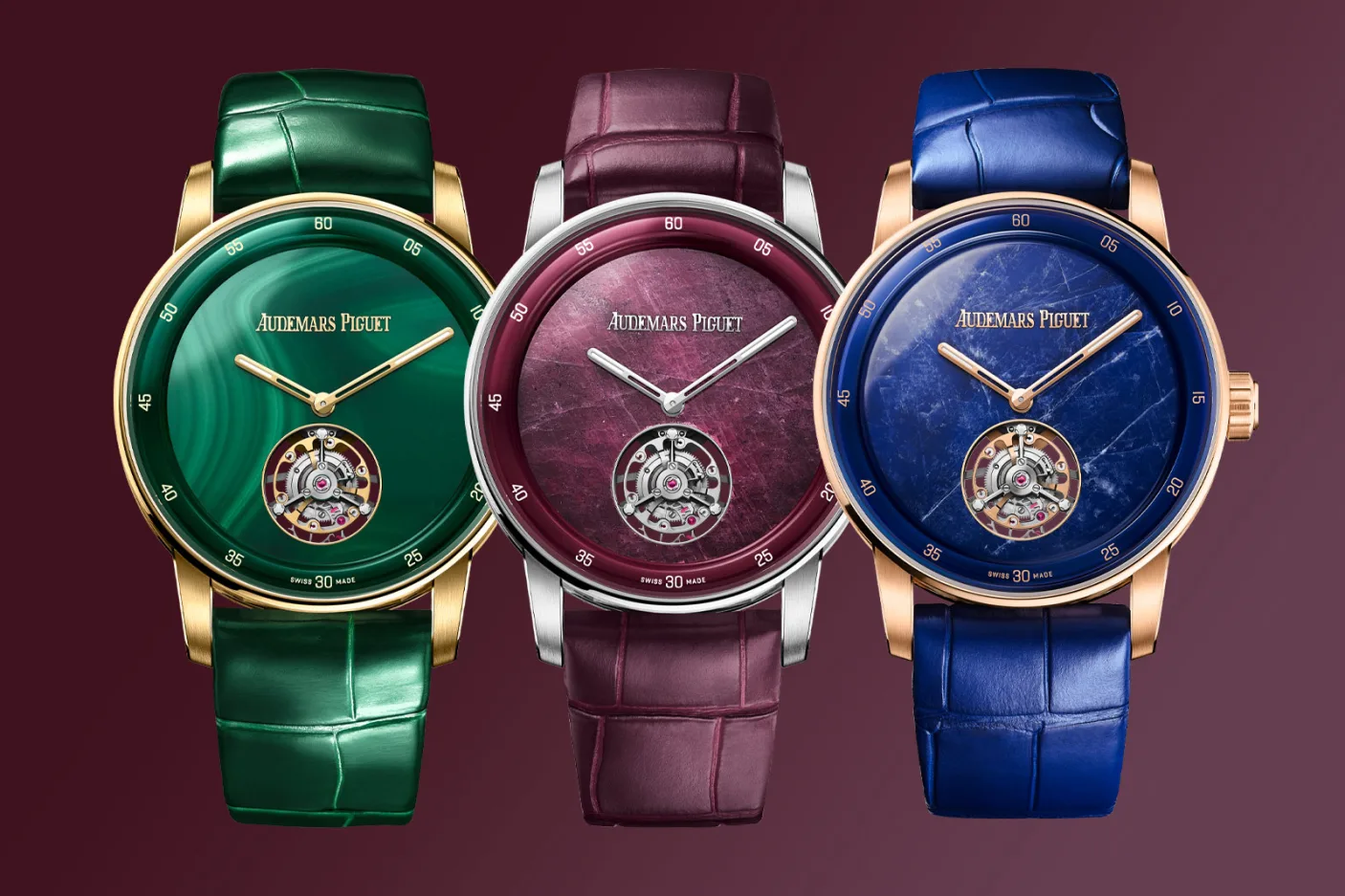
Audemars Piguet is clearly in the mood to riff on its own back catalogue while nodding to the fashions of yesteryear. As part of its 150th anniversary parade, the Le Brassus manufacture has brought stone dials back to the fore in the Code 11:59 Selfwinding Flying Tourbillon, now offered in a compact 38 millimeter format in three grandiose variations of stone and color.
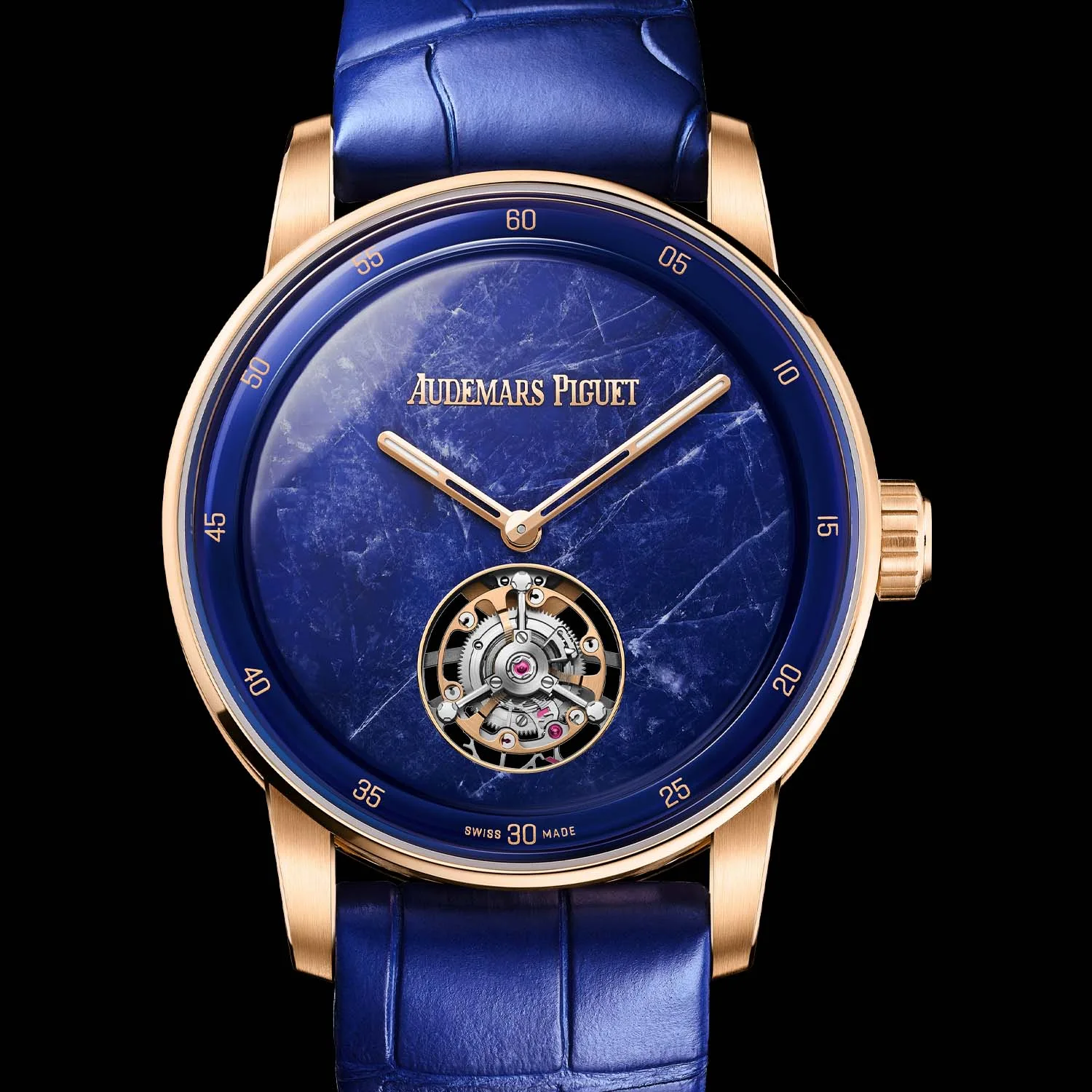
The 38 by 9.6 mm case carries forward the angular design introduced with Code 11.59’s polarising 2019 launch. Its slim bezel, scalloped lugs and octagonal mid-case shift between satin brushed and polished finishes. Gold anchors the trio, with white for ruby root, pink for sodalite and yellow for malachite. Water resistance is rated at 30 metres, modest but appropriate for its formal character.
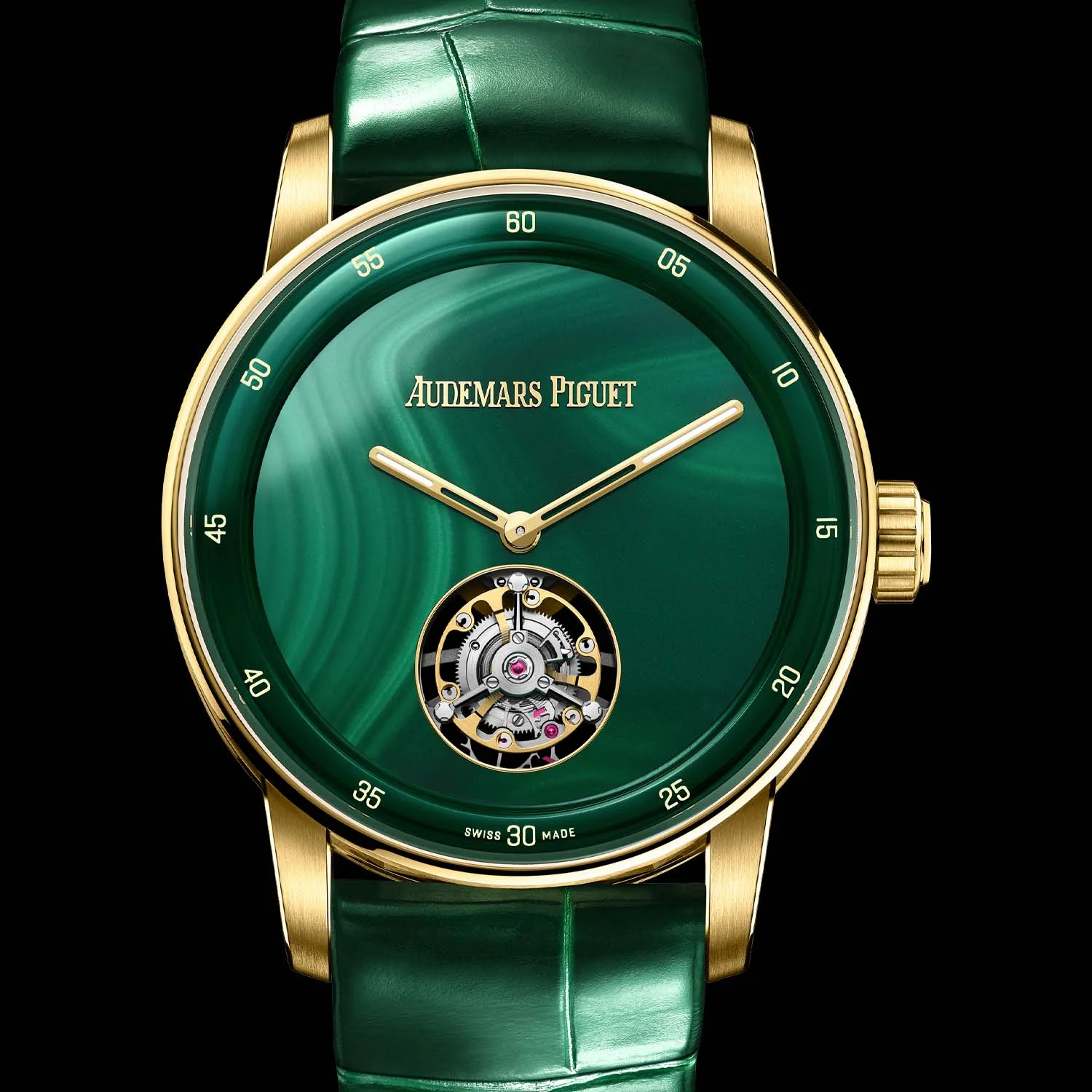
The spectacle amps up on the dial. Red ruby root from Tanzania, blue sodalite from Brazil and green malachite from Zambia are cut so thin they resemble brushstrokes, with natural veining uninterrupted by markers.

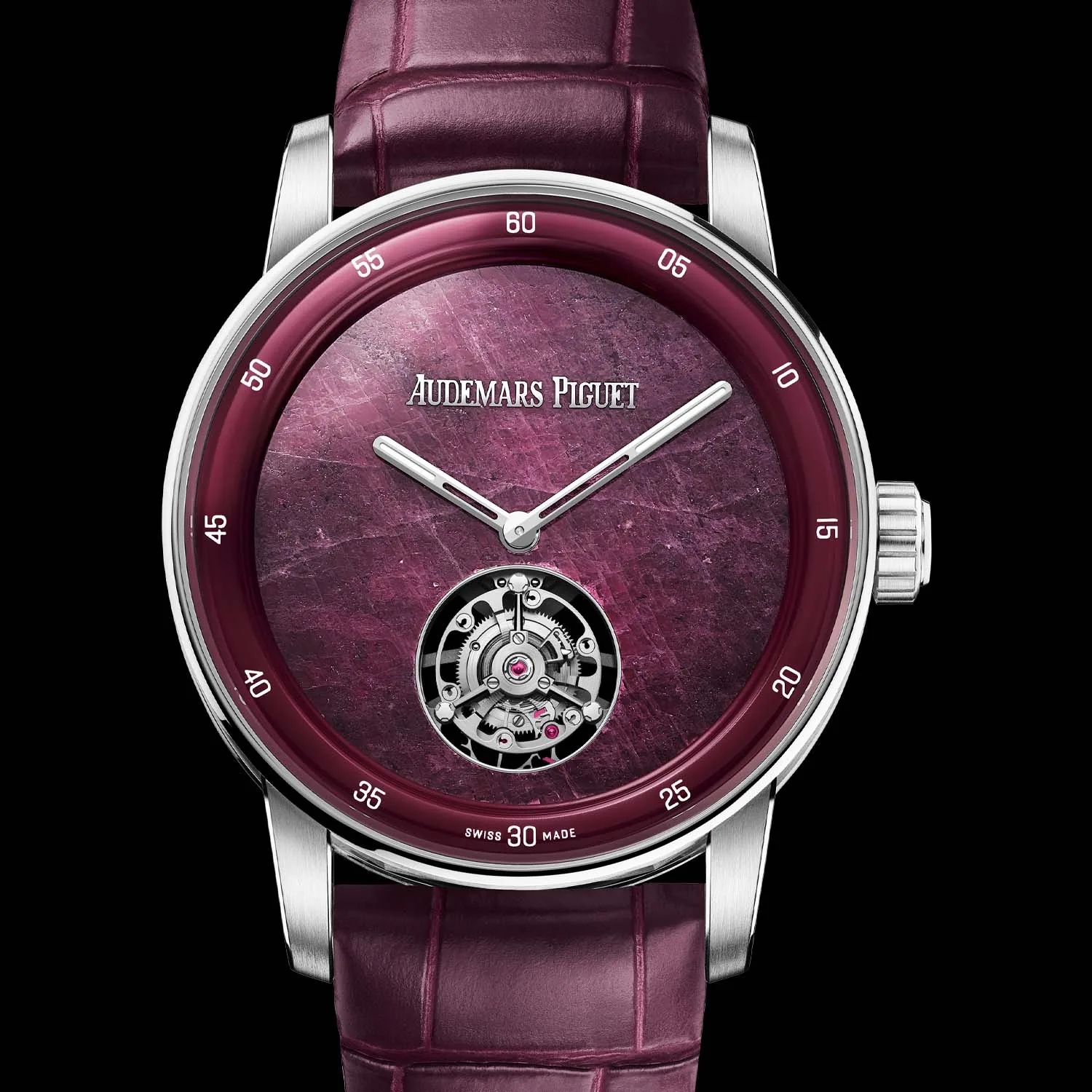
A flying tourbillon rotates at six o’clock, framed in case-matching gold. Gold hands, cut through to reveal their frame and tipped with light, glide over an opaline ring steeped in the dial’s own tone.
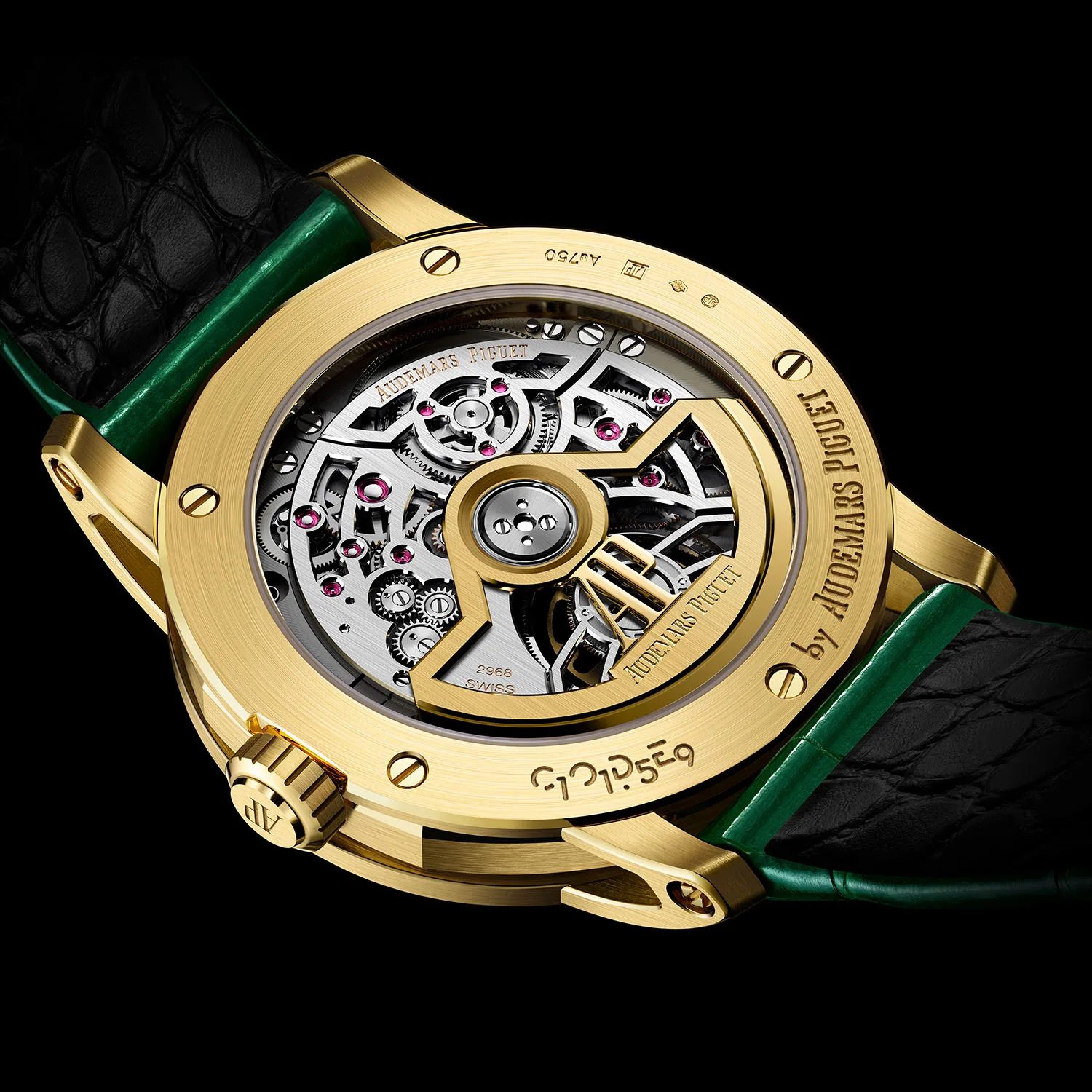
Beneath it all runs calibre 2968, a 3.4mm thick engine designed for watches under 41mm. It harnesses a peripheral drive, a lightweight titanium tourbillon cage and a high-amplitude escapement to steady the 3 Hz rhythm. Autonomy stretches to 50 hours, while the rear view discloses openworked bridges, straight-grained finishes and a 22k gold rotor in harmony with the case metal.
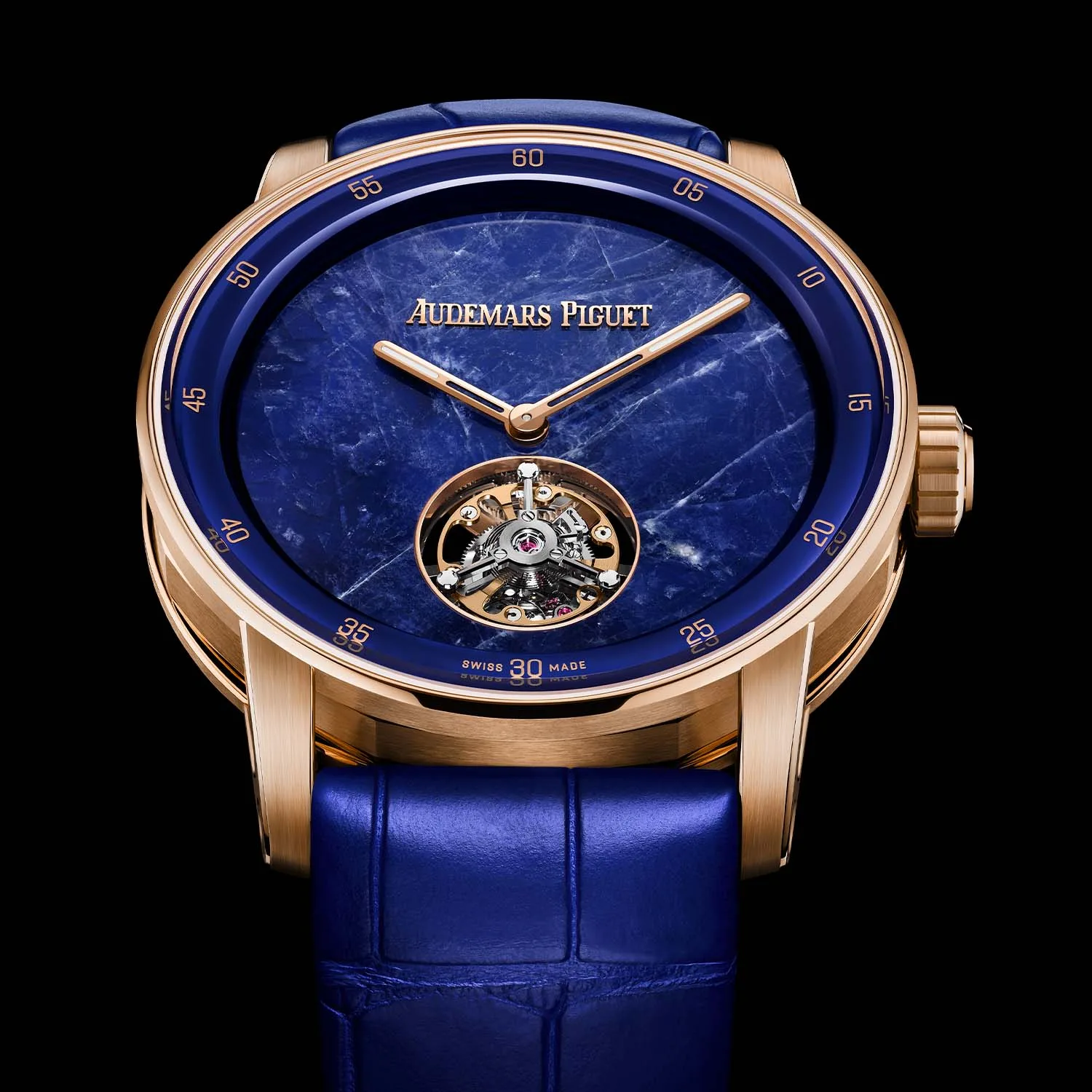
Each model is paired with a colour-matched alligator strap fastened by a gold folding clasp, with rubber-coated options waiting in the wings. Limited to 150 examples per dial, the price reads CHF 140,000.