BY JOVAN K
A. Lange & Söhne has been making some seriously complicated chronographs for a long time, going back 1999 to when the Saxonia Datograph was released, and things got even more interesting when the german brand introduced the Saxonia Double Split in 2004. I have spent quite a bit of time with the Double Split, and even today it is a pretty complex piece of watchmaking, with its split-seconds function allowing you to measure intermediate and comparative times. Then in 2018, Lange took things to another level with the Saxonia Triple Split in 18k white gold and a grey dial, adding rattrapante functions to the minute and hour counters. In 2021, the 18k pink gold version with the blue dial arrived, and that one has always been my favorite.
The Triple Split was basically Lange saying, “okay, let’s see how far we can take this”, and it remains the most complicated chronographs (pure chrono) ever made. Now, almost a decade after the original launch, Lange has finally given the Triple Split a platinum case and a completely new dial color combination, and I can already say that this is a very different from the two gold versions.

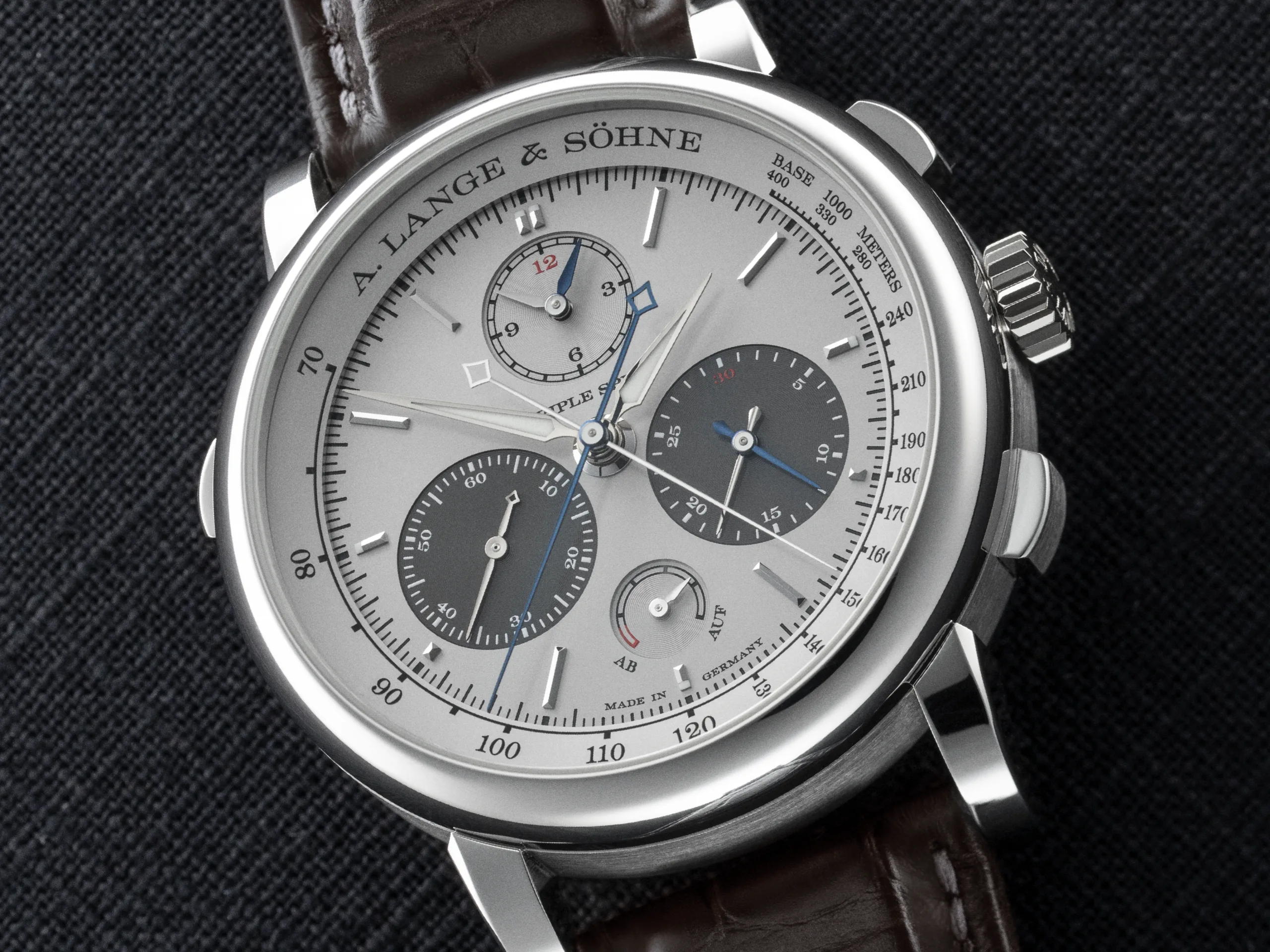
The 950 platinum case measures 43.2mm × 15.6mm, so this is obviously not a small watch, but with something like the Triple Split, I actually think the size works. The case has the typical Lange combination of polished and brushed surfaces, and the finishing is exactly what you would expect, with the platinum giving everything a very cold and almost looks like steel. The crown sits at 3 o’clock, while the two chronograph pushers and the rattrapante pusher is positioned between 9 and 10 o’clock, and like all the Lange chronographs I have spent time with, the pushers feel incredibly smooth with very little resistance.

And then there is the weight. The gold versions are already heavy, something I already know from personal experience, but this platinum version is the elephant in the room compared with them. Platinum is denser than gold, and you can feel that immediately when you pick it up, but somehow still very wearable once it is on the wrist. Flip it over and the sapphire caseback gives you a full view of the L132.1 movement, and the watch offers 30 meters of water resistance, which is pretty much what you would expect from a highly complicated watches like this.

I have to admit, I was a little surprised by the dial color choice when I first saw the new Triple Split. I was half expecting Lange to go in a completely different direction for the platinum version, and honestly, I would have loved to see something like an Azure, Onyx or even an Lumen dial with silver sub-dials. That would have looked very nice in combination with the platinum, but the rhodié-colored dial with the darker grey sub dials is really beautiful.

The dial has a lot going on, with the blued rattrapante hands, and different accents and shades of grey giving everything enough contrast without making it look too busy. The sapphire crystal does a good job of letting all that detail come through, and the overall color combination is much better than I expected.
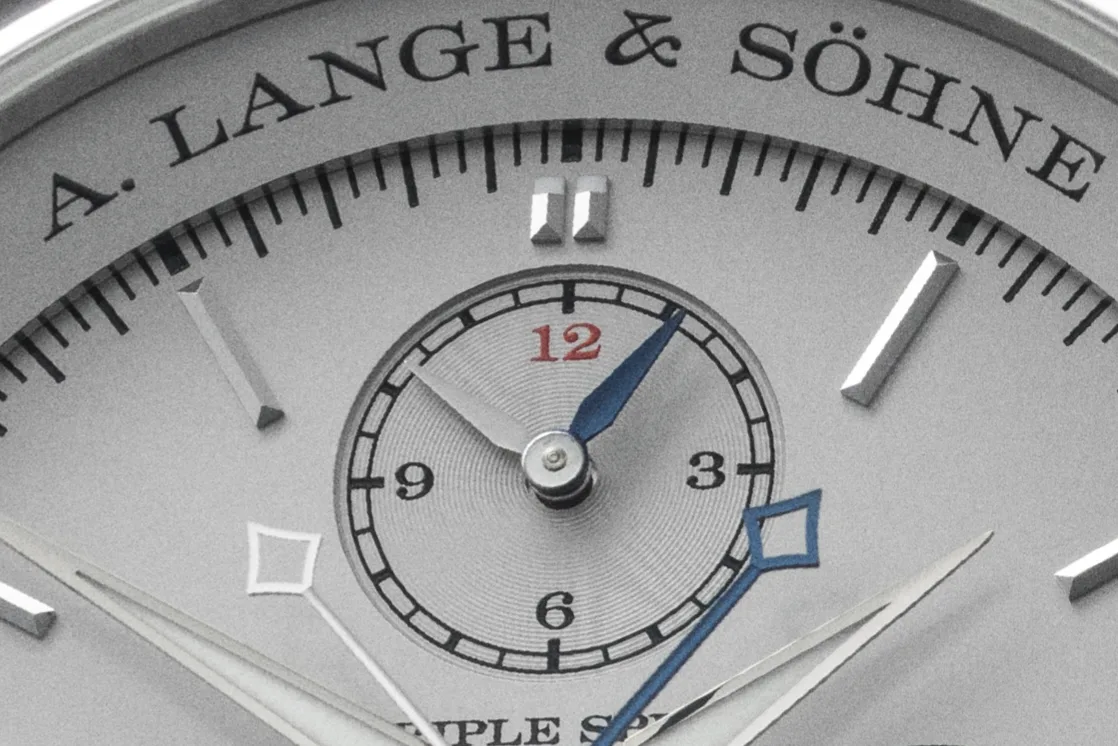


Lange’s Director of Product Development, Anthony de Haas, considers this as his favorite Triple Split, which I found interesting as the other versions are so different.

Inside the new Saxonia Triple Split 424.025F is the manually wound L132.1 calibre, and this is where things get properly crazy. The movement measures 30.6mm in diameter and 9.4mm thick, beats at 21,600 vibrations per hour and gives you 55 hours of power reserve, while the triple rattrapante system allows intermediate and comparative measurements from 1/6th of a second all the way up to 12 hours. You also get a flyback function, jumping minute counters, continuous hour counters, sub seconds and a tachymeter scale.
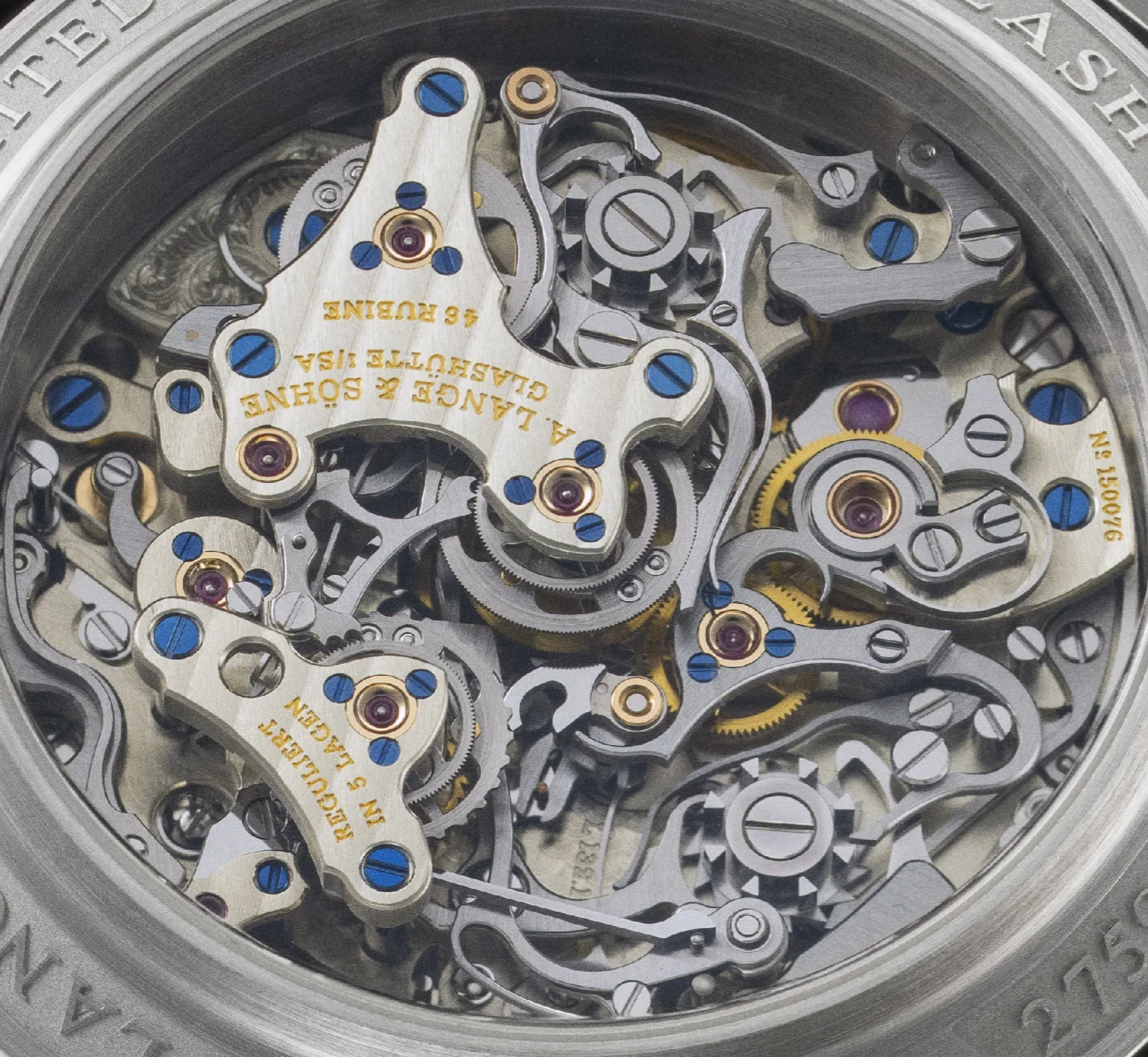
There are 567 individual components inside, along with 46 jewels and 5 screwed gold chatons, and through the sapphire caseback you get to see all of it working together. The movement is finished in typical Lange fashion, with untreated German silver bridges, Glashütte ribbing, hand-engraved balance cock, bevelled edges and polished internal angles, while the levers, springs and rockers receive their own finishing.


It is one of those movements where the complexity is obvious, but the finishing keeps you staring at it long after you have already understood what it does.

The watch comes on a dark-brown hand-stitched alligator strap with grey stitching and a platinum deployant buckle, and I really like the choice of brown here. It adds some warmth to what is otherwise a very cool combination of platinum, rhodié and grey, and in person the strap color works extremely well with the dial. The new Triple Split in platinum is limited to 100 pieces, and the price is on request, but you can expect to pay around €210,000.
It is massive, complicated and very heavy, but it still manages to look and feel right on the wrist, and a hands-on review with a lot more pictures is coming next week.
Explore more at A. Lange & Söhne