
BY HARLAN CHAPMAN-GREEN
Glashütte Original is one of the many big names coming from the little German town of Glashütte in Saxony. Glashütte is to Germany what towns like La-Chaux-de-Fonds or Le Locle are to Switzerland: it’s a town where the main goods leaving it tick and often cost buyers a pretty penny. Like many watchmakers marking a significant anniversary in 2025, Glashütte Original is celebrating an anniversary this year, specifically, its 180th.

To mark the occasion, Glashütte Original’s watchmakers looked to the skies and were inspired by what they saw. This new limited edition of the PanoMaticLunar features a dial made from aventurine glass, also known as goldstone, which is a first for any Glashütte Original watch. Supposedly invented by accident by Venetian artisans on the island of Murano in the 17th century, but with some artefacts known to have existed since the 12th century (see the bibliography of that link), aventurine glass is renowned for its glittering appearance. It’s easy to see why Glashütte Original, having been inspired by the stars, chose this material for their dial. The little reflective flecks in the dark blue backdrop shine and give a special frame to the moonphase complication this watch features.
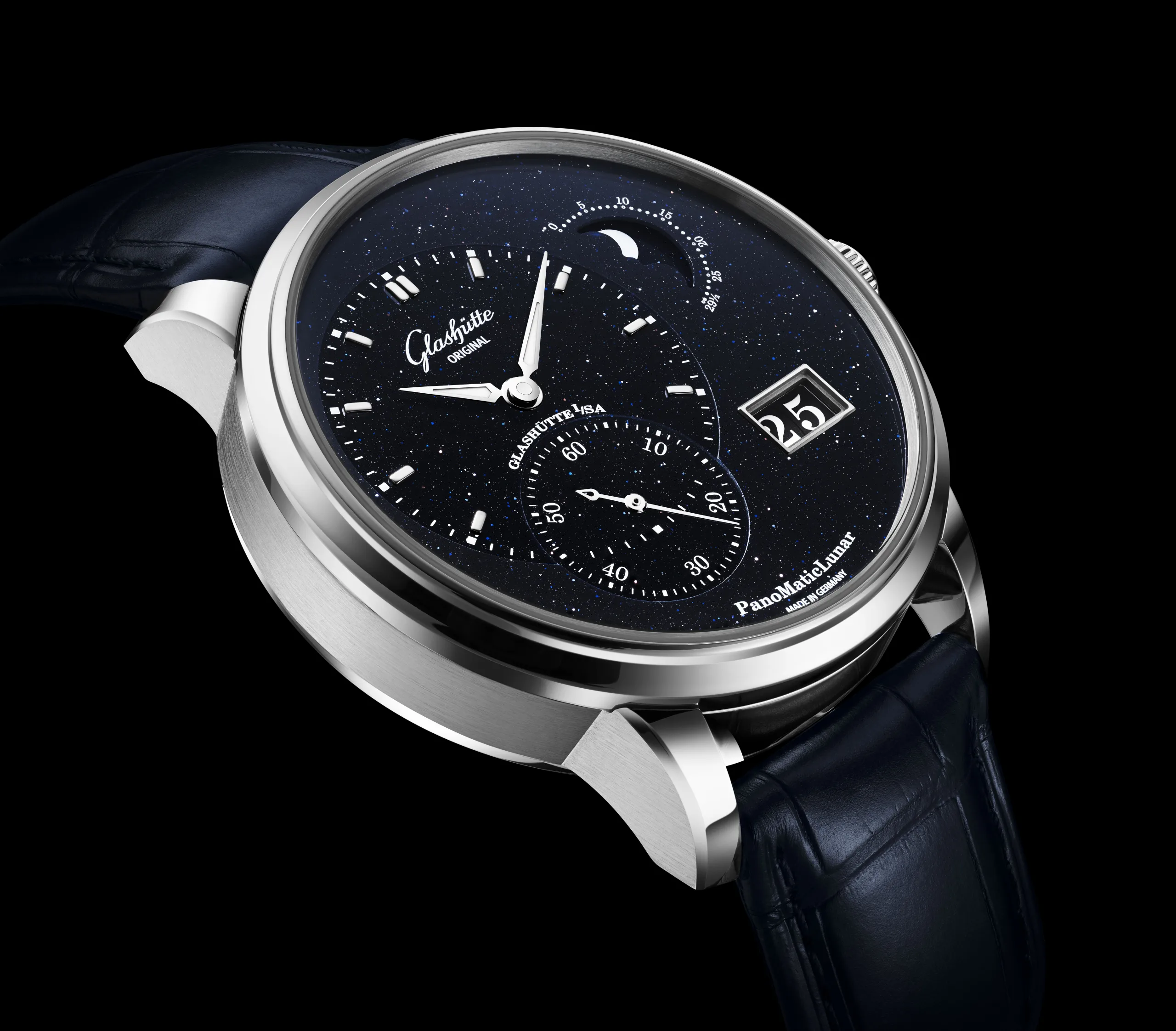
The layout of the PanoMaticLunar remains unchanged, meaning the time is displayed in a smaller dial in the upper left, with a small seconds dial below that and the other complications set on the right. This specific style of splitting the watch’s display up, with the time on the left and other functions to the right, is quite specific to the watchmaking of Glashütte, even if (as one reader pointed out on my last Glashütte Original article splitting the time up across a watch’s dial is not itself unique. The Panorama date, featuring two different disks displaying the numbers for the date, can be found in the lower right with the moon phase above it. Dots of SuperLumiNova on the dial and the use of SuperLumiNova on the gold hands mean that the PanoMaticLunar will still be a legible timekeeper when you’re out stargazing.
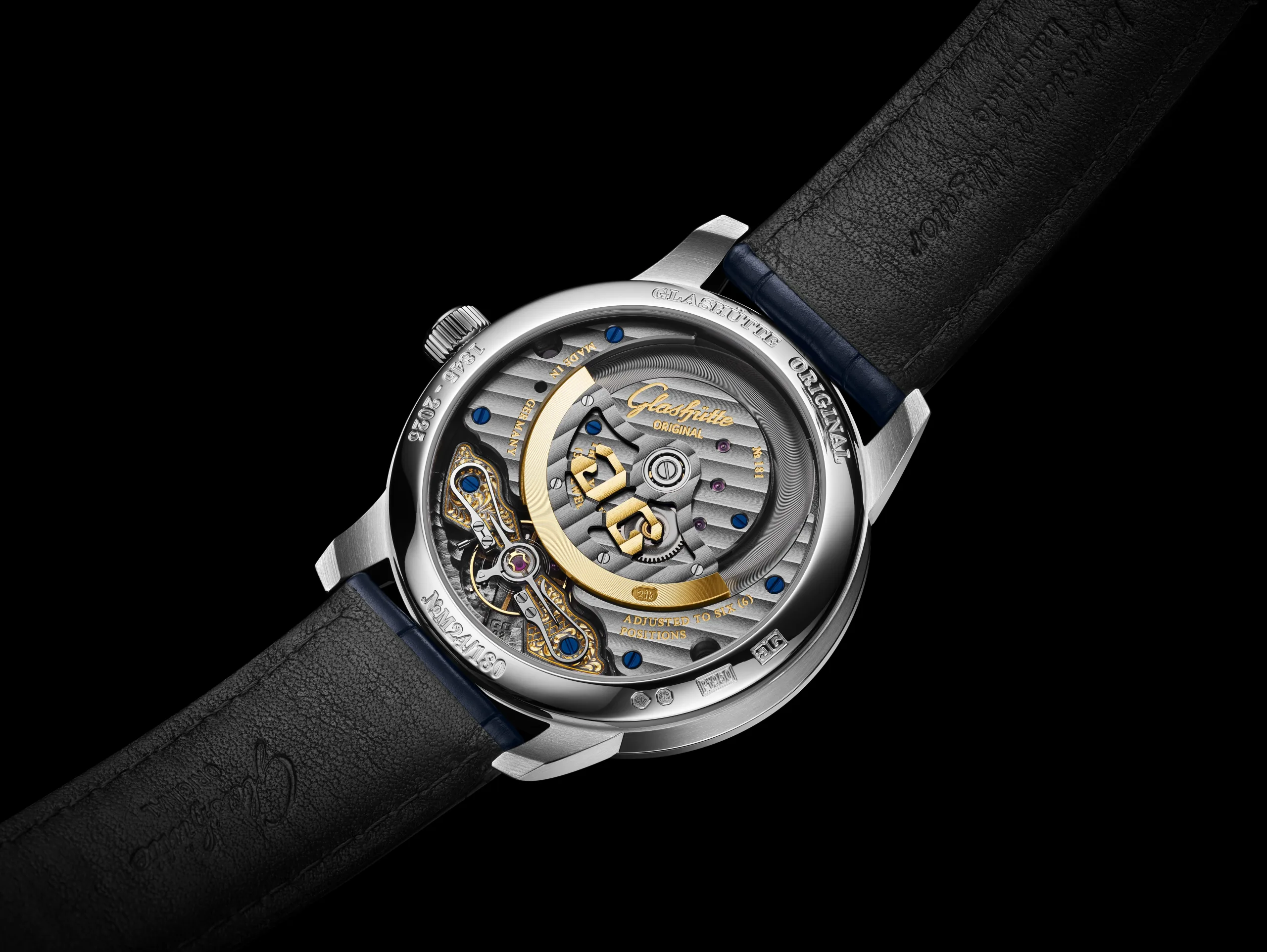

On display through the sapphire crystal caseback is the self-winding calibre 92-14. This movement features the classical Glashütte construction that both Glashütte Original and some of its neighbours use. The movement is mostly covered by a finely decorated three-quarter plate, which in the case of the PanoMaticLunar, has a self-winding rotor that also features high-quality finishing and Glashütte Original’s ‘Double G’ logo. The balance bridge is not obscured by the three-quarter plate and features hand engravings below Glashütte Original’s duplex swan-neck fine adjustment system, which Glashütte Original’s watchmakers use when they’re regulating (aka fine-tuning) the watch’s balance spring. The movement beats at 4Hz and has a power reserve of about 100 hours.
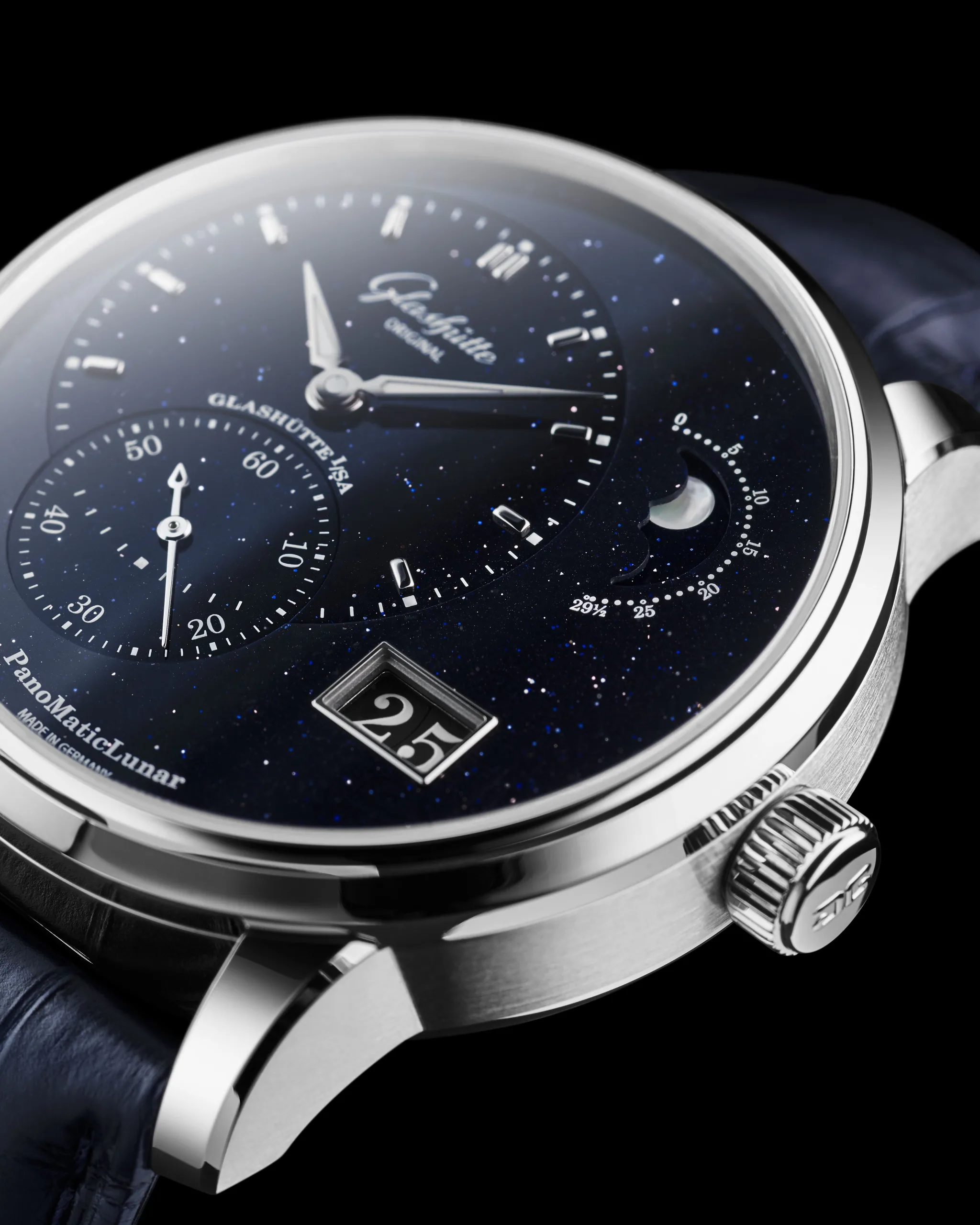
All of this is set in a platinum case measuring 40mm x 12.8mm, which is a good size for most people. The watch comes with either a blue Louisiana alligator leather strap or a blue synthetic strap, both options feature a platinum folding clasp.
It’s always interesting to see how one small change can make a big big difference to a watch’s design. Glashütte Original’s decision to use aventurine glass shows how versatile a great design can be. If you’re after one of these watches, know that they’re limited to 180 examples worldwide to mark the brand’s 180th anniversary, and the price is $39,500 regardless of whether you opt for the leather or the synthetic strap.