By Salim Hammad
When it comes to complicated watches, everyone knows the usual suspects: Patek Philippe references like the 3940, 5004 or 2499. They are magnificent, but they are also the answers everyone gives. For this list, I wanted to pick my own favourites, watches that bring some nuance and perhaps a different flavour of complication collecting. They are not the most obvious grails, but each is fascinating in its own right. Even better, most of them can still be found on the secondary market for $65,000/£50,000 or less, which makes them realistic choices for collectors who want to experience true complications without wandering into fantasy territory.
Complications are more than just mechanical flourishes. The best examples mark turning points in watchmaking: they remind us of what was possible, and they often reset the standard for what the industry would do next. The five watches below may seem wildly different: a minute repeater in platinum, a perpetual with hobnail bezel, even a poetic Vacheron with a map on its dial. Yet they all played their part in pushing horology forward.
5. Patek Philippe Perpetual Calendar 5039 (1990s to 2000s)
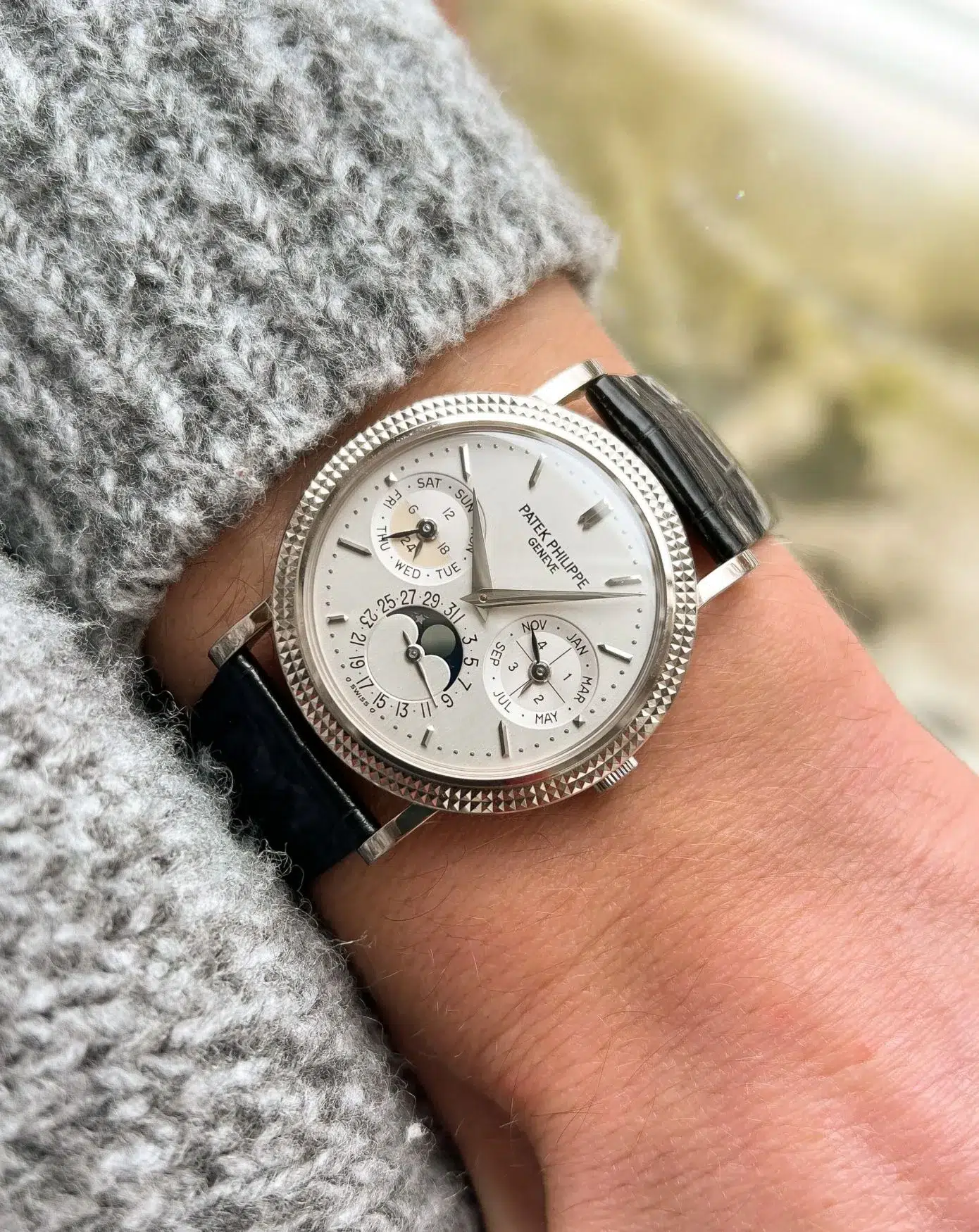
The 5039 is Patek Philippe in its most classic form. It is a perpetual calendar powered by the calibre 240 Q, wrapped in a discreet 35 mm case with a hobnail bezel.
Why it is a great pick:
- One of the thinnest automatic perpetual calendars of its time, at just over 3 mm in movement height
- The calibre 240 Q is a micro rotor perpetual calendar calibre that remains a technical benchmark: slim, reliable, and exquisitely finished
- The hobnail bezel ties it back to Calatrava tradition, while the perpetual calendar makes it a modern grande complication
4. Blancpain Perpetual Calendar Split Seconds Chronograph 5581 (1990s)
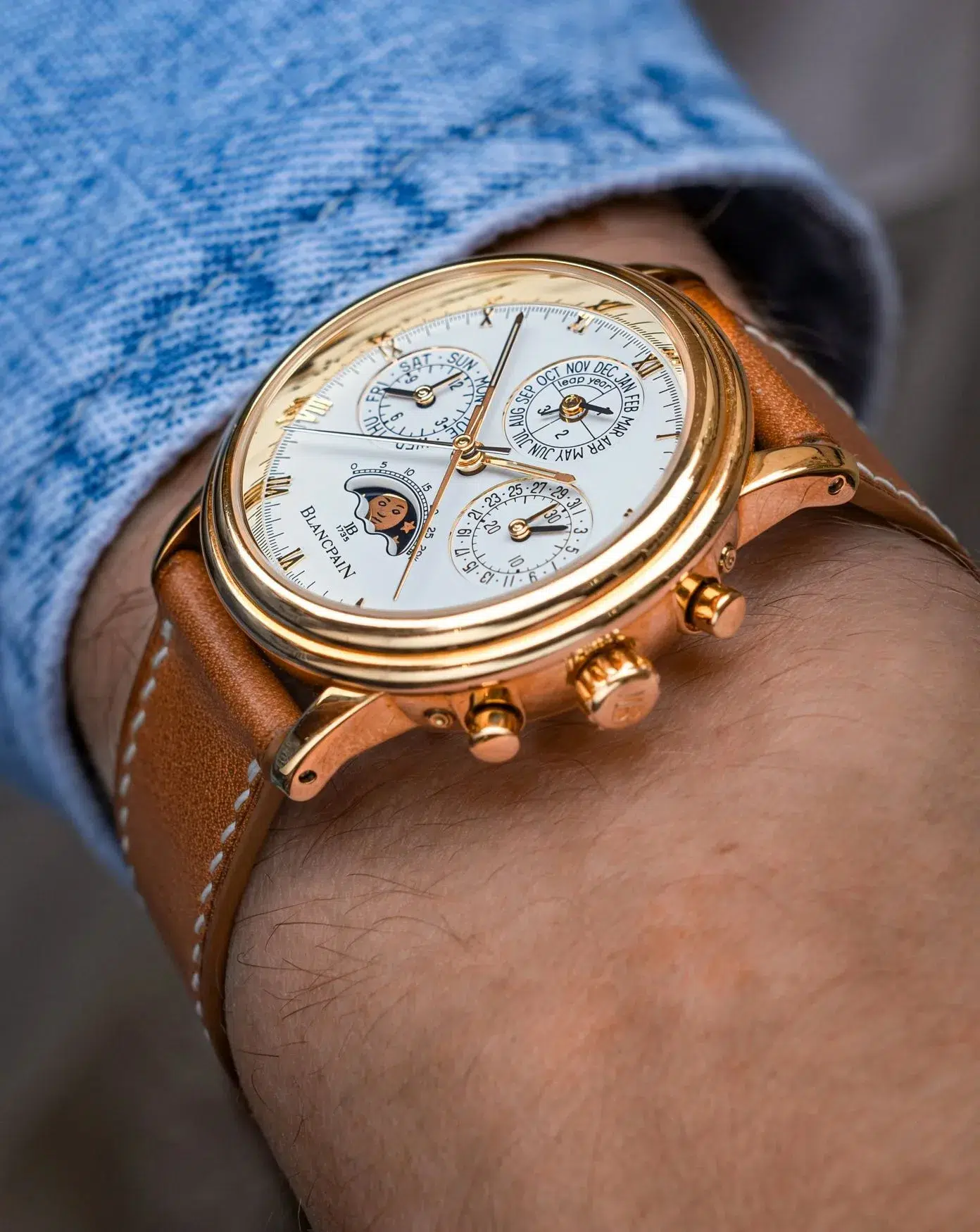
The 1990s were a decade of horological bravado. Brands wanted to prove they could build anything. Blancpain, under Jean Claude Biver’s direction, became famous for bringing back mechanical complications. The 5581 is a poster child of that era: a perpetual calendar combined with a split seconds chronograph.
Why it is a great pick:
- The split seconds complication was seen as the ultimate chronograph flex, allowing two events to be timed simultaneously
- Adding a perpetual calendar on top created a stacked complication that few dared attempt
- It is a rare watch, produced in small numbers with beautifully executed dials and Geneva stripes
3. Audemars Piguet Quantième Perpétuel 25558BA (1980s)
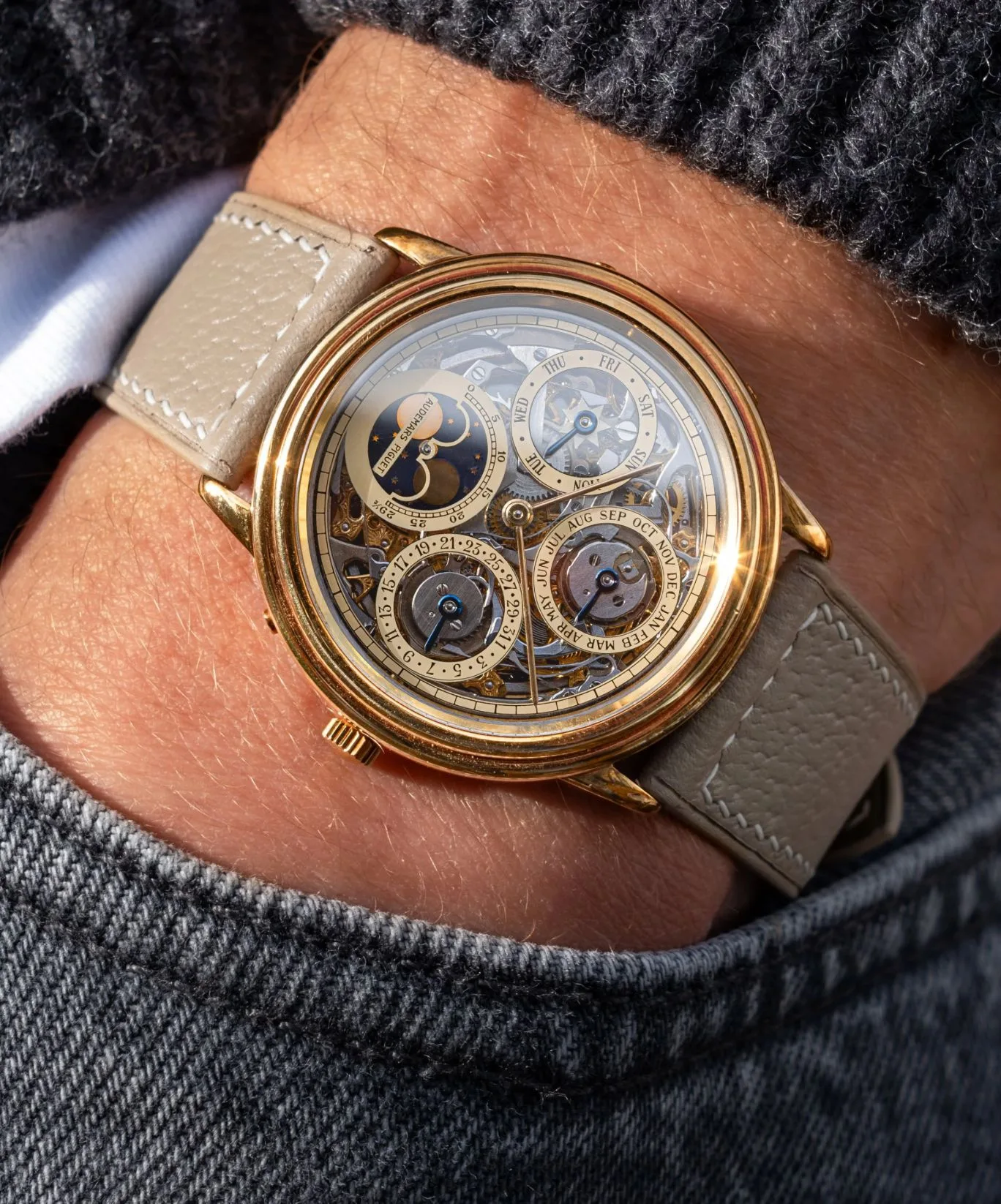
In the early 1980s, the Swiss watch industry was still reeling from the Quartz Crisis. Mechanical watches were out of fashion and many maisons were cutting back. Audemars Piguet quietly launched one of the most important perpetual calendars of the modern era: the 25558.

Why it is a great pick:
- One of the thinnest automatic perpetual calendars of its time, at just over 3 mm in movement height
- It revived collector interest in high complications during a period when very few were being made
- The 25558 set the stage for Audemars Piguet to become a leader in complicated watches, not just in the Royal Oak line
What it changed:
This reference, and its siblings, are credited with almost single handedly saving the mechanical perpetual calendar from extinction. It showed that the perpetual was not just an antiquated complication, but something collectors still wanted in a slim, elegant package.
2. Vacheron Constantin Mercator 43050 (1996)
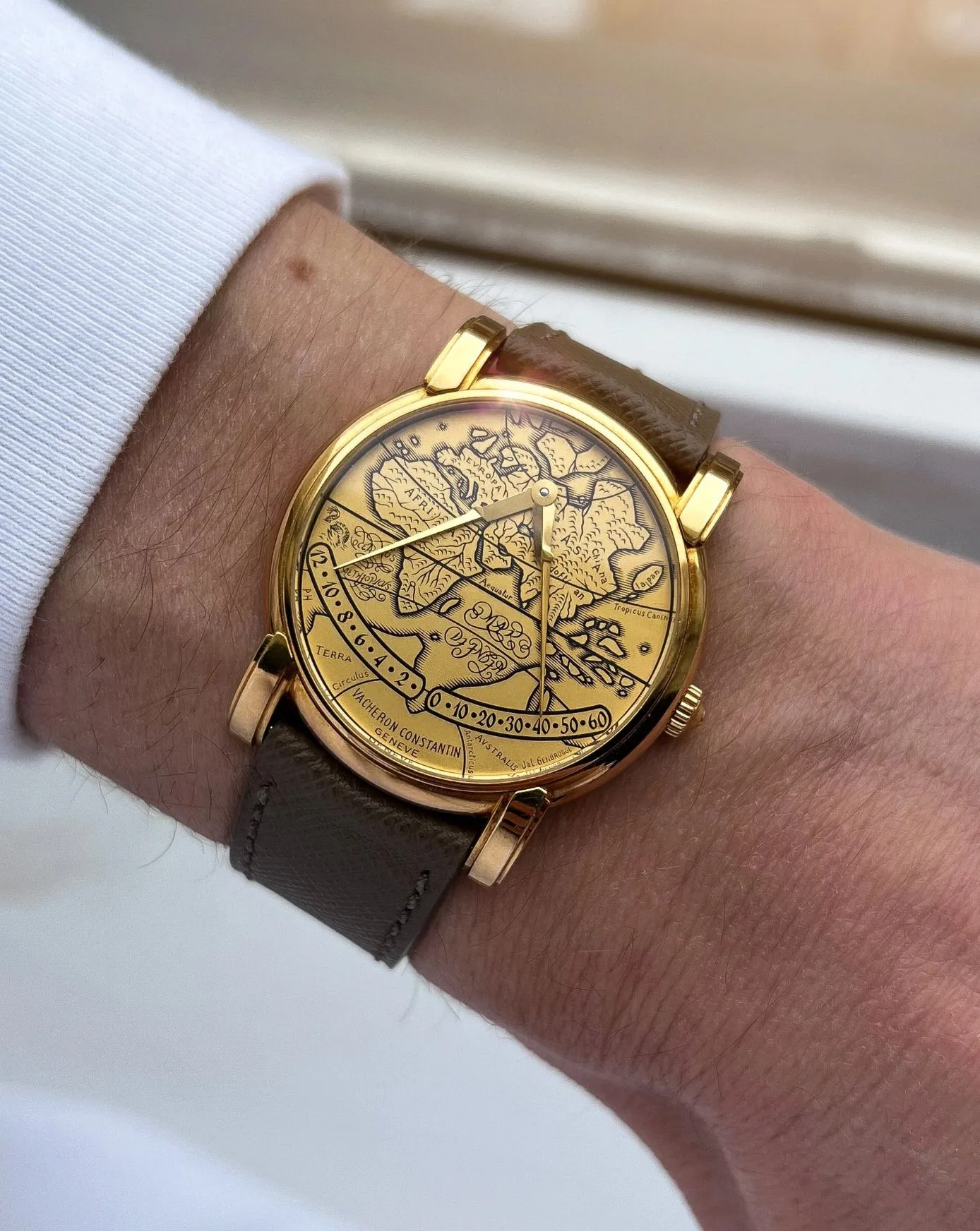
The Mercator is a strange bird in this flock. It is not a calendar or a repeater, but an artistic complication. Inspired by Gerardus Mercator, the 16th century cartographer, it used retrograde hands sweeping across painted map dials.
Why it is a great pick:
- The dial itself was enamelled or engraved with maps, making every piece feel like a miniature artwork
- Retrograde displays gave the watch mechanical theatre, with hands snapping back to zero each hour and minute
- It was part of Vacheron’s Les Cabinotiers approach, bridging fine arts with watchmaking
1. Breguet Minute Repeater 3637 (Platinum, late 1990s)
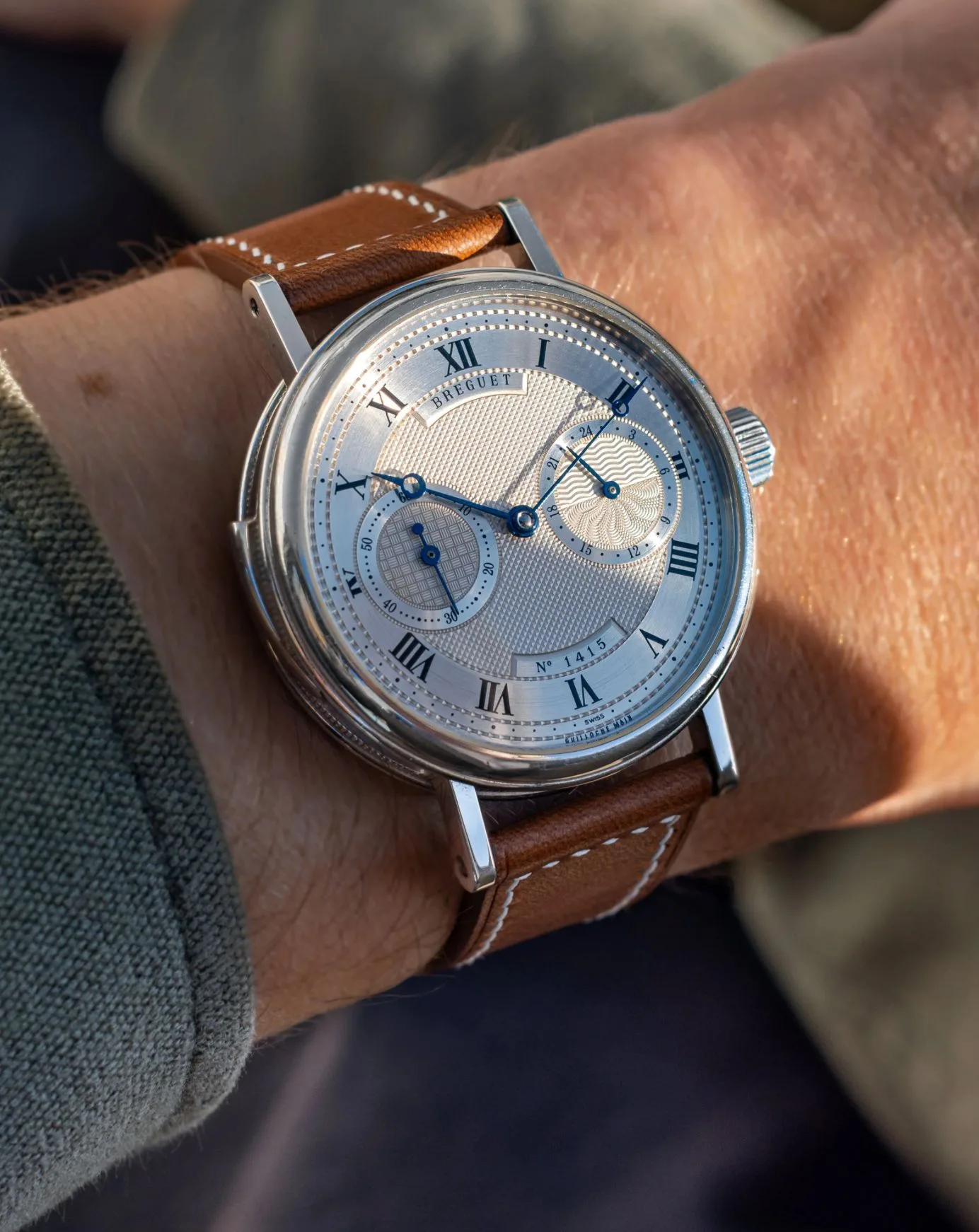
Minute repeaters are always special, but Breguet’s 3637 brought the complication back into platinum dress cases at a time when most brands were still cautious about such costly horology.
Why it is a great pick:
- Platinum is notoriously challenging for acoustic performance, but Breguet tuned their repeaters to sing even in the densest metal
- The movement finishing was pure Breguet: hand engraving, traditional bridges, and meticulous polishing
- Owning one was as much about experiencing horological sound as about telling time
What it changed:
The 3637 helped re establish Breguet as not just a historical name but a living manufacture capable of the highest complications. It also marked a shift where repeaters were no longer museum relics. They could be contemporary wristwatches, available to a new generation of collectors.
Pics: Tim Vaux