

BY HARLAN CHAPMAN-GREEN
It’s been seven years since we last sat down for an interview with Anthony de Haas, the Director of Product Development at A. Lange & Söhne. That wasn’t deliberate on our part; it’s just how things go, but as we recently had the opportunity to speak with him while the Saxon brand was showing off its latest round of novelties, it was definitely worth it.

Below, we talk a bit more about his position within the company, his approach to watch development, and more. He’s a charismatic person who’s well known and liked for it, and I think that translates into the watches A. Lange & Söhne produces.



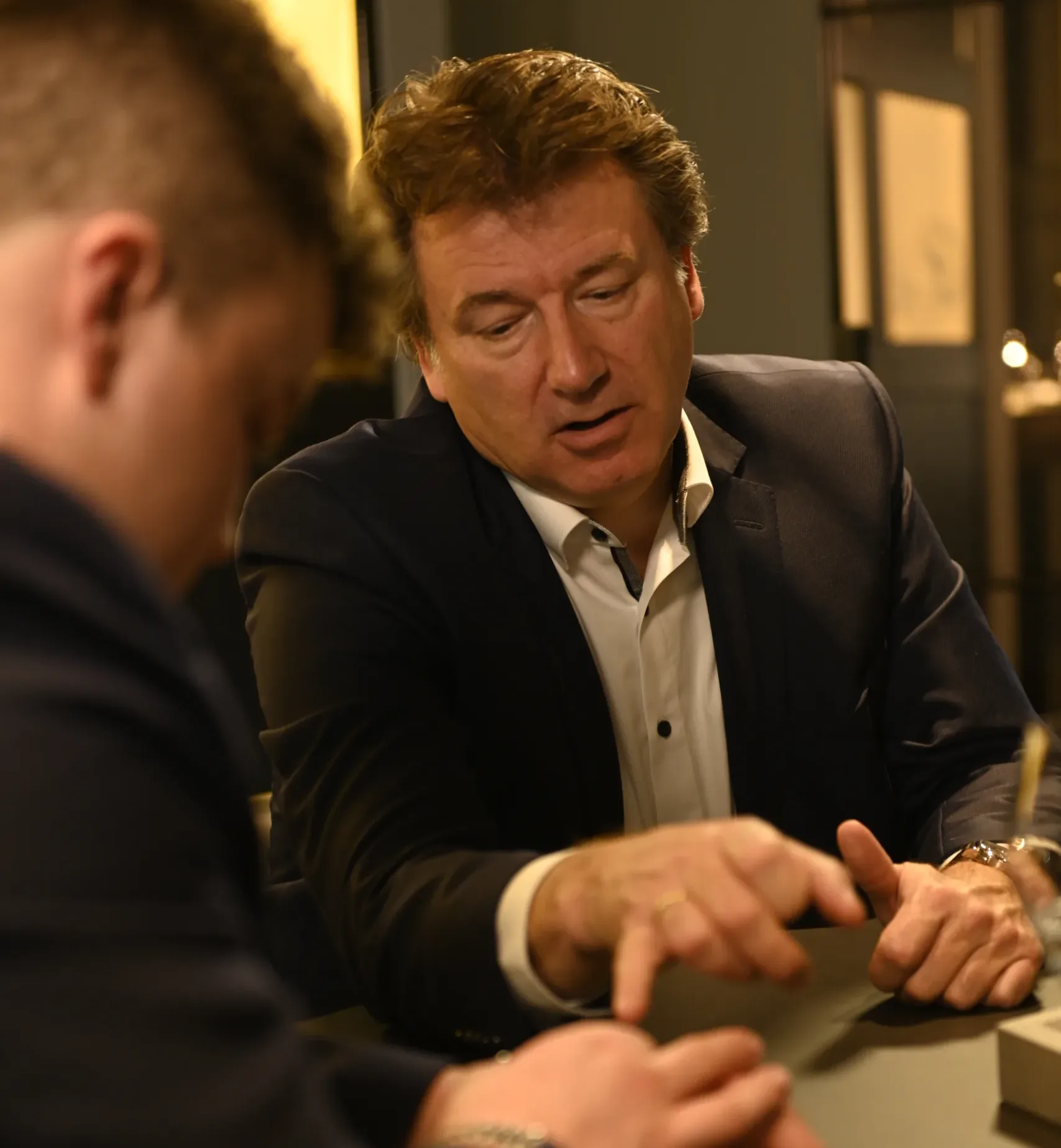
Before we get into it, a couple of things will provide some context. This interview took place in A. Lange & Söhne’s flagship boutique on Old Bond Street, London, the day before the opening of the Concours of Elegance at Hampton Court Palace.


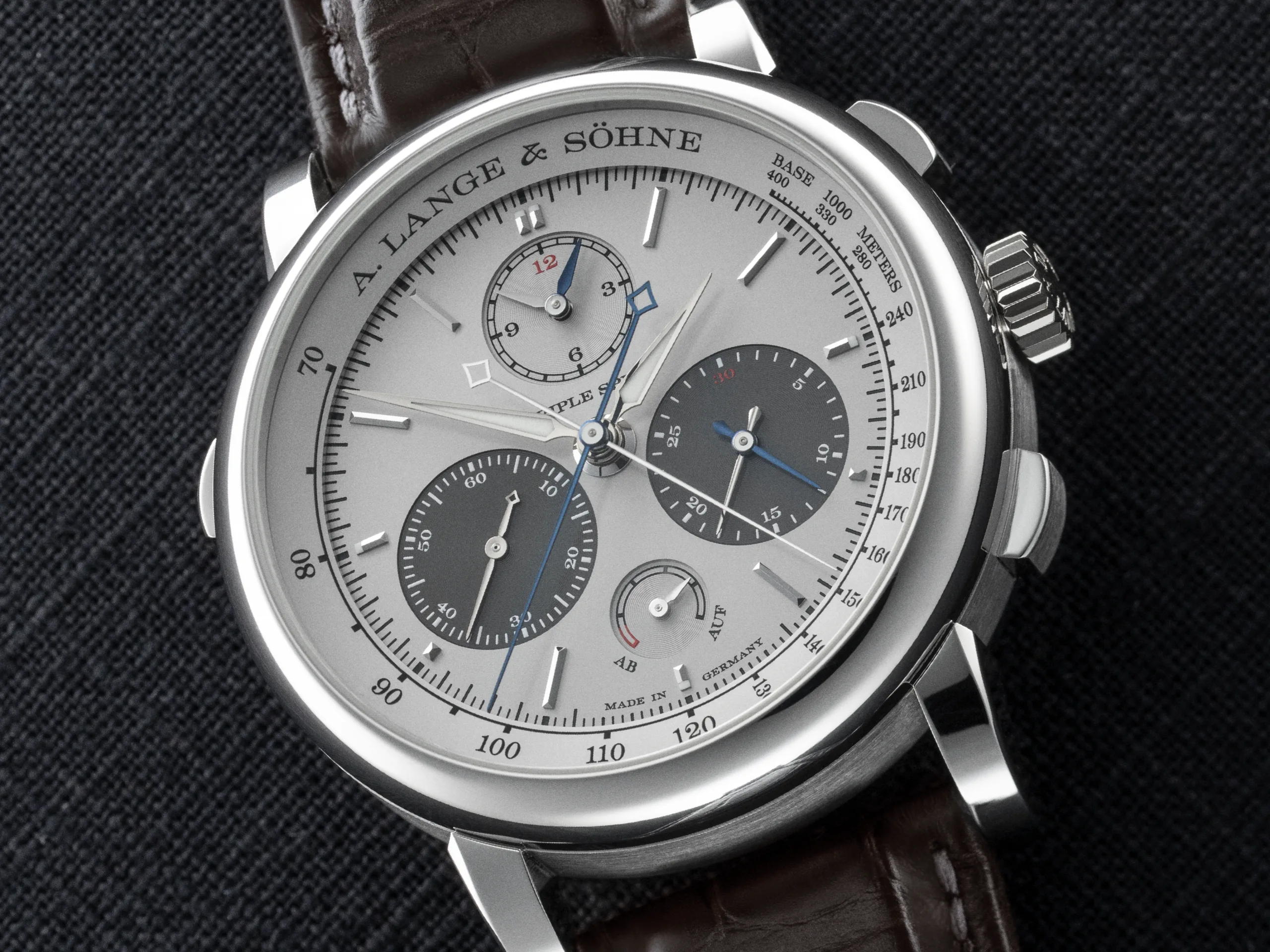
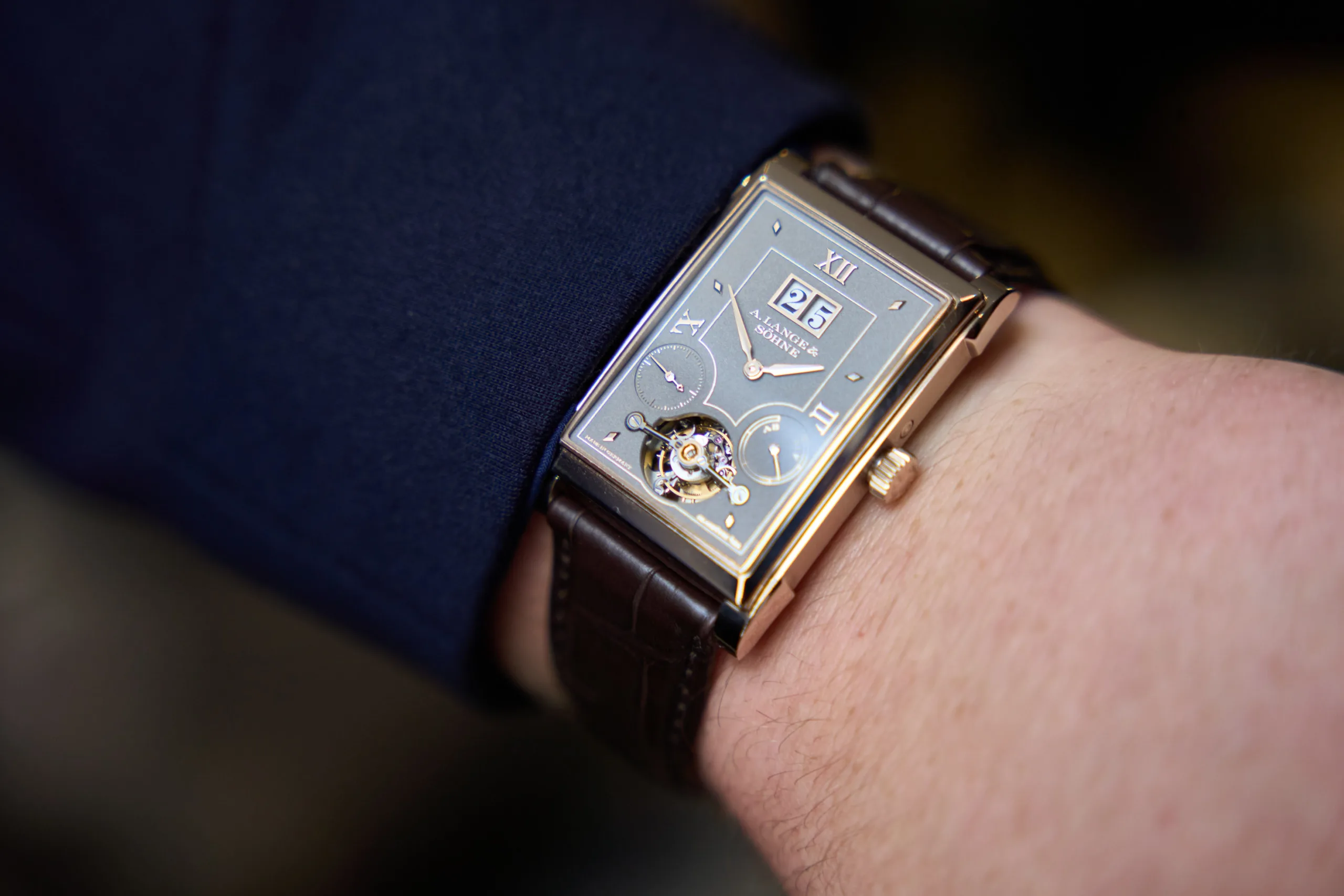
Between us on the table were all of the brand’s most recent novelties: these were the three newest watches (the 1815 UP/DOWN pieces and the Triple Split), the 36mm Saxonia Annual Calendar pieces presented at Watches & Wonders Geneva 2026, the Lange 1 Tourbillon Perpetual Calendar “Lumen” also presented at Watches & Wonders Geneva 2026, and the Cabaret Tourbillon Honeygold, which was presented in May 2026.


Also, later in the interview we talk a little about movement mechanics, and Anthony mentions degrees a bit; being a watchmaker himself, this is natural for him, but we tend to keep things easier to understand here on WristReview and leave other folks to get super technical. In this case, when Anthony talks about degrees, he is referring to the balance wheel amplitude, which means how far the balance wheel swings from its neutral position.
The balance wheel swings in one direction and then the other, but that amplitude decreases as a watch uses the power stored in its mainspring (other factors affect amplitude too, but they’re not relevant for this discussion). Complications in a watch consume some of the available power, a little like switching on the air conditioning in a car, and striking mechanisms in particular demand a lot of power. A well-designed movement can supply enough power from its mainspring barrel to meet the demands of its complications, even when several are operating at once, while still maintaining sufficient balance amplitude for accurate timekeeping.
With all that said, let’s dive in.
This time, my questions and statements are in italics.
First of all, how have things been?
They’ve been great. Busy. The year isn’t over, but it’s good; we’ve had positive vibes in general and very good feedback about our watches. Nobody saw this [the Cabaret Tourbillon Honeygold] coming, which was the idea. It’s not easy to surprise everyone, but we try.
And of course, with the [36mm Saxonia] Annual Calendar, we had a lot of questions, with people saying it’s so small and trendy. We started these in 2020. Why small? Sometimes I challenge my movement designers; I asked them if they could make an annual calendar which would fit in a 36mm case. We didn’t have a design for the 36mm case, but they did the calculations; we made rapid prototypes in different sizes, and then we printed the dial designs out and put them in. It’s very basic, but it’s cool. The previous Saxonia Annual Calendar was 38.5mm across, and if you come up with a new thing, you need to differentiate it a bit. We thought 36mm was cool. Maybe I’m a bit of a big guy to be wearing that size; I don’t know.

I don’t know; this new smaller size surprises a lot of people
Right? Before we had the little 1815 last year, we weren’t sure, but these new smaller sizes are quite cool. It’s not a trend; we’re not going to do smaller movements. We try to go as small as possible, but there’s always a compromise. You know, watchmakers often say, “the smaller the size, the shi**ier the quality”.
Right, so, Bvlgari, Piaget…
That’s different because they are the experts. I know Piaget makes excellent stuff — we have the Saxonia Thin, and they laughed to death at the 5.9mm thickness of the Saxonia Thin because you can pile up three Altiplanos in that. But that’s their thing, and we would always have a disadvantage. We have these gold chatons on our watches, and they add extra depth. The screws in the chatons need more length to hold things together, so our movements always end up 0.4mm thicker than Swiss movements.
Thickness isn’t a disadvantage, though.
No, it’s us! And it’s making the watchmaking industry way more colourful by having all these different designs. If we tried to copy all the other brands, it would be awful.
I agree, and the rise of independent brands shows that this way of thinking is common.
It’s very good for the industry, I think, because post COVID-19 all the brands were doing massive quantities of watches, and everything was possible price-wise. I think people went more into individualisation, and that’s good for young watchmakers and the profession. Although the amount of independent watchmakers is almost inflationary, and they all do very similar things, like showing the mechanisms on the front of their watches.
This is just the beginning, though. I know a lot of these guys, and if you’re at the beginning, you need to learn; you need to learn how to design.
Do you think in the future A. Lange & Söhne will learn to open-work the dials of its watches?
We don’t do that. Internally, we always say that open-working dials is watch porn, and we don’t do porn. We leave it up to the owner — if they want to share what’s on the caseback, it’s their choice.
We have this one (gestures to the Lange 1 Tourbillon Perpetual Calendar “Lumen”); it’s hard to recognise stuff under a glass dial, but we illuminate the whole thing, so this one is the closest to watch porn.
We’ve been thinking because we have people tell us that our movements are so beautiful and we should show them at the front. We ask why, because everyone is showing things on the front, and that’s a reason for me not to do it.
I find that it seems like a great idea to open-work a watch, but then you see it in person, and you can’t read anything on it…
Plus, you have very, very cheap skeletonised watches out there, so where’s the differentiation? We have the Handwerkskunst watches; we’d thought about doing one [open-worked watch] as a shock piece, but it was too “in your face” for us, even as a Handwerkskunst piece.
We haven’t seen too many of the engraved Handwerkskunst pieces in a while; will they be coming back?
Oh yes, certainly. The reason is that we’ve now made a few with enamel dials, and we’re really proud to do that in-house. But for certain they’ll be back, like a couple of years ago with the Datograph Handwerkskunst, which was engraved. It’s not like first we’ll do engraving and then enamelling; it’ll be a mix — it’s very spontaneous.

Okay, so like, this is your new toy, so you focus your energy on it…
Yeah, absolutely! And the ideas come mostly from a very small team, who are part of my development team. There are three ladies who do the enamel dials and two guys who support them with the mechanical procedures, and they come up with the ideas. They come up with sketches, and we work on that. I think it’s good because it comes from them rather than one guy who says we should do these things because of targets and blah blah blah. It’s coming from the heart of the people at the heart of the company. Most of the ideas come from them.
This one (he gestures to the Cabaret Tourbillon Honeygold) has a dial we made in-house. It’s not a Handwerkskunst, but it’s the style of dial we did first in the Tourbograph Perpetual. In fact, it’s a solid plate of honeygold, and it’s milled away by a machine, except for the material for the letters and numbers, which are raised. We do a blasting session, and then we use grey rhodium, and then we take the rhodium away on the upper layers to reveal the honeygold again. It gives a certain depth in the dial and a certain modernity, and I think the colour combination with the honeygold is gorgeous. It’s still a classical timepiece, but it has a hybrid modernity.
Do you have to say no to a lot of ideas or are you happy to let people try things?
Most of the time, I say to try out an idea. I’m very much a guy for trying; typical Germans tend to debate about things, which is a certain culture. I’m more like “let’s try”, because during the process of trying you’re learning, you’re struggling, and maybe if it doesn’t work for one idea you can use that experience for other things. It’s always fruitful, because otherwise you don’t have the courage to try out new things.
The Zeitwerk is an excellent example of this, as it’s a crazy idea to make a mechanical watch with a digital display. The more we worked, the more struggles we had, and the trial and error we had was immense.
I remember the Datograph Handwerkskunst development… People say A. Lange & Söhne is a big company now and just a part of Richemont – we get satisfaction from having something new that says “we’re gonna show the world what we’re capable of”. With the Datograph Handwerkskunst, we went completely mad; for the Roman hour markers, we did the bevelling on them. Normally you can’t do that. And the chronograph levers had black polishing on every one of them, which is a nightmare for a watchmaker! We made the case from yellow gold, and then we looked at the finished product and realised how good it looked. Our clients told us how good it looked. And the tremblage technique around the dial just looks so good. Our sales guys went mad; they said they were gonna get so many calls from all clients for only making 25.
But the people making the watches, they’re always optimistic. I ask them how many watches they could make of that quality, and they answer with 50, maybe. We do the calculations and realise we should do fewer because we need to consider how long it will take to produce the watches. If you take ten years to deliver the watches, then nobody’s interested. I know that Kari Voutilainen has a waiting list of 12 years; it’s a lot. We say that we have 2 years or 2.5 years to deliver the watches to clients. So we tell the people making the watches we’re gonna do 25, and after 10 dials they come and say to me, “Tony, we’re quite happy we’re making 25 because making these is a nightmare!” You know, the collectors may be annoyed that there are just 25 watches produced, but if you’re a collector, you know how the business works. It’s not a game for us.
So you have a timeframe where you say if you can’t make something and deliver it within a certain time, you won’t do it?
That’s right.
I think it’s difficult, especially for us at WristReview, to explain how this all works, because other brands will make you wait a long time.
We had a huge thing with our Grand Complication watch. We made six of those, and I know that one of the two watchmakers who built them took between 9 and 12 months for one watch.
Yeah, and if that watchmaker is unwell…
Exactly, if one watchmaker is unwell, then you’re reduced to half capacity for production. We didn’t need 6 years to make the 6 pieces, more like 4 or 5, but those watchmakers worked their arses off because they didn’t want to make people wait.
So the watchmakers drive themselves to make the watches?
Yes, they do, and it can be dangerous with watches like the Grand Complication because if you try to take shortcuts, you fall on your face. We learned that the hard way, but it’s okay because that was our first big complicated piece. You had the “standard” grand complication watches with rattrapante chronograph and the tourbillon and perpetual calendar… But the grande sonnerie in combination with the petite sonnerie and the minute repeater was killing the power reserve and therefore the timekeeping.
The rule we had with that watch: when around midnight the grande sonnerie and the calendar will activate at the same time, the rule is that even if the owner starts playing with the minute repeater around that time, the watch will have 280 degrees [of amplitude] when fully wound and 240 degrees after 24 hours. That’s down to the watchmaker to regulate, and it takes time. People think these watches are like Lego; they think the watchmaker just assembles the things together and then moves on to the next. Nope! You put in a piece, screw it in, and realise it’s not quite sitting right, so you undo the screw, adjust it, and try again. And at this scale, if there’s too much tension in any piece, it’s a problem.
That’s the mystery of watchmaking, and if you see it happening in the factory, then they’ll understand, but many people think that the watches are like Lego, which they aren’t at all.

And at A. Lange & Söhne, you assemble your watches twice, right?
Yeah. Every watch. The simple ones, the complex ones, everything. And that has to do with German Silver most of the time, and all the gold chatons. The watchmaker has the mainplate with the normal jewels in, and then they have the [escapement] bridge, which they need to assemble, and all the chatons, which need their jewels in. When the watchmaker puts the wheels in they will look at several factors, such as if the hands shake. They can then decide if they need to adjust something, such as if a jewel is too high, they’ll need to take it apart and press the jewel a little bit — this is something they do by feeling – then they put it back and check it again. And if it’s too tight, they have to adjust it again, and they do that for all of the parts. That’s normal for watchmakers, and some even have machines to do that. We’ve tried it in the past to gain time, but the machines don’t work with the gold chatons we have, but it’s important that we tried it.
How long would it take someone to learn the hand skills you mentioned, where they can adjust things just by feeling?
Well, the courses at our in-house watchmaking school last for three years, and then if a watchmaker gets their diploma, they start working with us. They go to an extra department we have, which is kind of a training department, and there will be the first time they touch the real movements. We monitor how they’re doing, and some are very ambitious but not very talented; others are fine doing their work on the 1815s, for example, and then they go home at the end of the day. Only the best will go into the complications departments. Then we have a kind of rule that after someone has started, we’ll see over the next 5 years if they’re into watchmaking or not – some people don’t have the patience for it. Luckily for us, the majority aren’t like that. The people who aren’t into watchmaking, we try to put into other places — purchasing, for example, as it’s useful to have a purchaser who knows about watchmaking. We try to keep people around, and the majority do stay around. So I’d say it’s around 5 years; some people will be quicker, and some will be slower.
Then you have other people like me; I’m a watchmaker, but I don’t work at the bench anymore. I have a bench in my office because sometimes I look at prototypes. I made grande sonneries at Audemars Piguet, prototypes and then series watches, and we did around 4 a year, but they’re very complicated. If you gave me parts of a grande sonnerie now, I would probably need a year to complete it, whereas it was 4 months before. I’d need to read up again; they’re so complicated, and if you try to take shortcuts on a grande sonnerie, you’ll make mistakes, and you’ll have to go back and take everything apart. That’s frustrating, but it happens. Those are exceptional watchmakers who make those. The industry has maybe 30 watchmakers in total who are capable of making a grande sonnerie; that’s why some brands launch grande sonnerie watches, but they don’t produce them.
In Switzerland, the watchmakers move around a lot in the industry, but we’re quite fortunate in that they don’t tend to move around very much, even in Glashütte. We look after our staff; I think that’s important…
Earlier [before the interview] you said you got asked what your favourite watch is quite a lot, but you don’t like that question so much. So, what’s your favourite complication?
Striking watches.
Yeah?
Yeah, because I’m a drummer and a musician — and I worked on grande sonneries and minute repeaters. I love them because they’re an extra dimension in wearing a watch. This [gestures to the watch he’s wearing, a Minute Repeater Perpetual ref 607.091FE released in 2025] is a minute repeater perpetual. [he activates the minute repeater, letting it chime] This makes me happy. It comes a little bit from when I was building watches like this one: you work and build up the movement, and the magic moment comes when you get the finished movement, and you case it up. At that point, you have everything coming together, but you still have to adjust it and make sure it works. It’s difficult to make it all work, and you have to be very careful. That’s the magic moment for watchmakers, though, especially with a grande sonnerie, which strikes on its own, and I think that’s so cool. You don’t see the mechanism, but it’s there.
That’s what gets you going, I can tell!
Yeah! I’m happy that we now have three watchmakers in production and two in my department doing prototypes, and they can all do minute repeaters. If you had levels of complications, you have your tourbillons and perpetual calendars, and then above those you have minute repeaters. Well, much higher up [gestures with his hands] you have the grande sonnerie, and people ask us “why?”. The fact that the movement has to activate the striking system by itself makes it so much more delicate. For me, that would be the ultimate A. Lange & Söhne watch because you don’t see that there’s something happening, but through the caseback you can see it’s complicated. If you could do a Lange 1 with a grande sonnerie and only you knew you had it, imagine sitting in a meeting with that ringing the time off. The Zeitwerk Striking Time we’ve already done…
I was going to ask about the Striking Time; was that the first striking piece?
Yeah, that was our first watch with a striking mechanism.
But you don’t make it anymore?
No, not anymore, but who knows. There’s lots of demand; maybe we’ll see what we do. We have so many other ideas. That’s the problem in a way!
Before we finish, you’re known for your sense of humour and attitude to working; did people have to get used to you?
I’m still trying to integrate after 22 years! Ha! No, but I think the Dutch and the Germans are not so far apart from each other. I think the Germans always say, “Oh, you Dutch are so much more relaxed than we are”. I hear that a lot, although if you live in Holland, that would not be entirely true because I know a lot of Dutch people who are more “German” than Germans. The cliché Germans, anyway. I learned in Glashütte that the Germans are quite “normal” actually; otherwise, I wouldn’t have been there for 22 years. We have fun.
They had to get used to me in the beginning. In Germany, the hierarchy is very important; in Holland, it’s not. I’m very open because I prefer a good attitude; I’m not more important than the movement designer. Okay, I’m the captain, and I make the decisions, but in the end I’m not more important. And they had to get used to it in my team. They would say, “You’re the boss, you decide”. Yeah, but you’re the expert; you’re the movement designer who’s spent the last 3 months looking for solutions for this problem. And they’d tell me they had an A solution and a B, and they’d tell me I had to decide. I’d tell them that they’d worked on finding the solutions, so they were the expert. The answer would usually be, “If you ask me, then I’ll go for B” and I’d say to them we’ll go for B then. That’s collaboration. I’m not the god of watchmaking, for God’s sake; we are a team, and it’s not just my department but all of them. We can make the most beautiful creations, but if you don’t have people who can communicate, then we’re in trouble. So, we’re a team.
That wraps up our time together. Thank you so much for speaking with us again.
My pleasure!
Thank you to Anthony for his time, and to everyone at A. Lange & Söhne.
We can’t wait to see what’s coming next!
Explore more at A. Lange & Söhne
